Labour Day in Canada falls on the first Monday of September, a date that the country shares with the United States but arrives at through a distinct history. The holiday grew from a specific moment in Canadian labour politics — a moment that involved printers, a prison cell, and a Prime Minister who saw a political opportunity. Understanding where Labour Day came from helps explain what workers have actually built over the past century and a half.
The Toronto Printers' Strike of 1872
The story begins in March 1872, when the Toronto Typographical Union walked off the job at several newspaper offices, demanding a nine-hour workday. Among the employers affected was George Brown, founder of the Globe and a Liberal member of Parliament. Brown had the union leaders arrested under British conspiracy laws that remained in force in Canada, charging them with criminal conspiracy for organising a trade union.
Prime Minister John A. Macdonald, a Conservative and no friend of Brown's, responded by introducing the Trade Unions Act. Macdonald's bill legalised union activity, stripped away the conspiracy charges, and positioned the Conservative Party as the defender of workers' rights — at least temporarily. Brown was furious. The arrested union leaders were released, and the demonstration held in their support became the occasion for what many consider the first major Canadian labour parade.
From Toronto to Ottawa: The First Official Parade
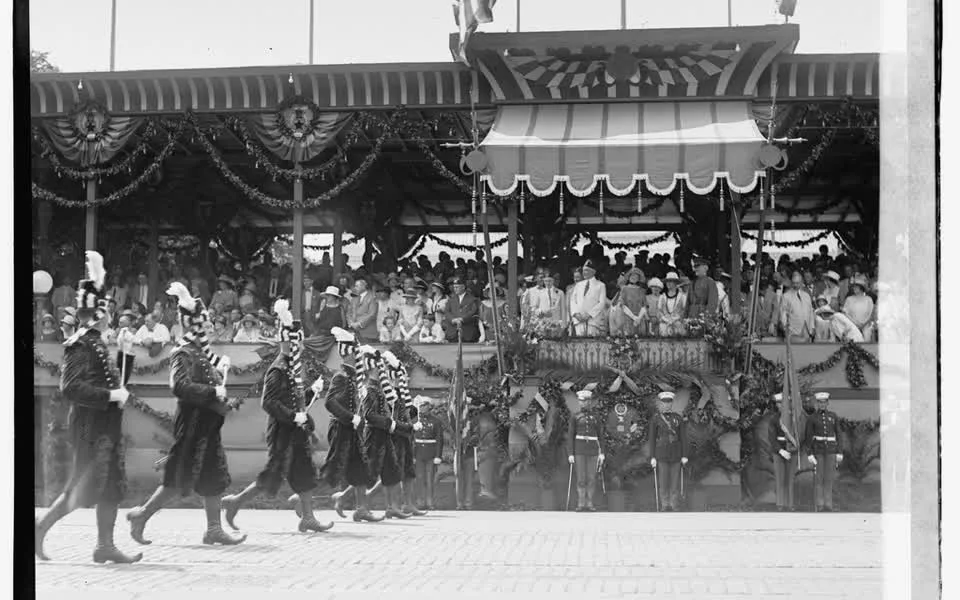
The 1872 demonstration in Toronto was locally significant, but the event that most directly inspired Labour Day as a national holiday took place a decade later. In 1882, the Toronto Trades and Labour Council organised a substantial procession through the city, attracting delegations from other Canadian cities and representatives of American unions. The parade was widely reported and demonstrated the growing capacity of organised labour to put thousands of workers in the streets in an orderly, public display of solidarity.
Similar parades followed in other Canadian cities through the 1880s. In 1894, the federal government under Prime Minister John Thompson declared the first Monday of September a public holiday to honour workers. Canada's Labour Day preceded the American one by several years in official recognition, although the two countries' labour movements had been in close contact throughout this period, exchanging organizers, publications and tactics.
What the Holiday Represented
Early Labour Day celebrations in Canada were explicitly political events. Unions marched in trade order — printers with printers, carpenters with carpenters — carrying banners that announced their organisations and their demands. Speeches at rallies covered the issues of the day: shorter hours, safer conditions, the right to organise without criminal liability. Labour Day was a demonstration of collective power, a visible counting of heads, and a statement that workers were a constituency with demands that politicians could not ignore.
The holiday also had a social dimension. Labour Day picnics, excursions and family events gave workers a collective gathering that was rare in an era without paid vacations. For many working-class families, the Labour Day celebration was one of the few large public events of the year.
The Holiday Through the Twentieth Century
As union membership grew through the mid-twentieth century, Labour Day parades in Canadian cities became large events. The Toronto Labour Day parade at its peak in the 1940s and 1950s drew hundreds of thousands of spectators. Similar events in Hamilton, Windsor, Montreal and Vancouver drew crowds that reflected the density of union membership in industrial Canada.
The character of the celebration gradually shifted. As the labour movement became more institutionalised and less confrontational in its public posture, Labour Day parades became more of a civic celebration than a political demonstration. Floats replaced some of the banners, and entertainment supplemented the speeches. This shift reflected both the achievements of the labour movement — won conditions had become normal expectations — and the challenges of maintaining mass mobilisation in an era of rising prosperity.
Labour Day in Peel Region and Ontario
In the Peel Region, Labour Day has traditionally been marked by events organised by local labour councils, including picnics, family gatherings and, in some years, community rallies tied to specific campaigns. The region's large and diverse workforce — spanning manufacturing, logistics, healthcare, education and service industries — reflects the breadth of the contemporary labour movement in ways that the early craft-union parades could not.
Ontario's major Labour Day events continue to be held in Toronto, where the annual parade, while smaller than its mid-century peak, remains a fixture in the city's calendar. Labour councils across the province use the occasion to highlight current campaigns on wages, benefits and working conditions.
What Labour Day Means Today
For some Canadians, Labour Day has become primarily the end of summer — a long weekend before school starts, the occasion for a last barbecue or cottage trip. That cultural drift is real, and many in the labour movement view it with some ambivalence.
At the same time, the protections that Labour Day was created to demand — the eight-hour day, the right to organise, workplace safety, paid time off — are more contested than they appeared to be a generation ago. Precarious employment, legislative restrictions on bargaining rights and the growth of gig work have reminded many workers that the protections they rely on were not always there and are not guaranteed to remain. Seen in that light, Labour Day retains its original purpose: a reminder that working conditions are the product of collective effort, not natural law.
For more on the history of Labour Day in Canada, visit the Canadian Labour Congress.