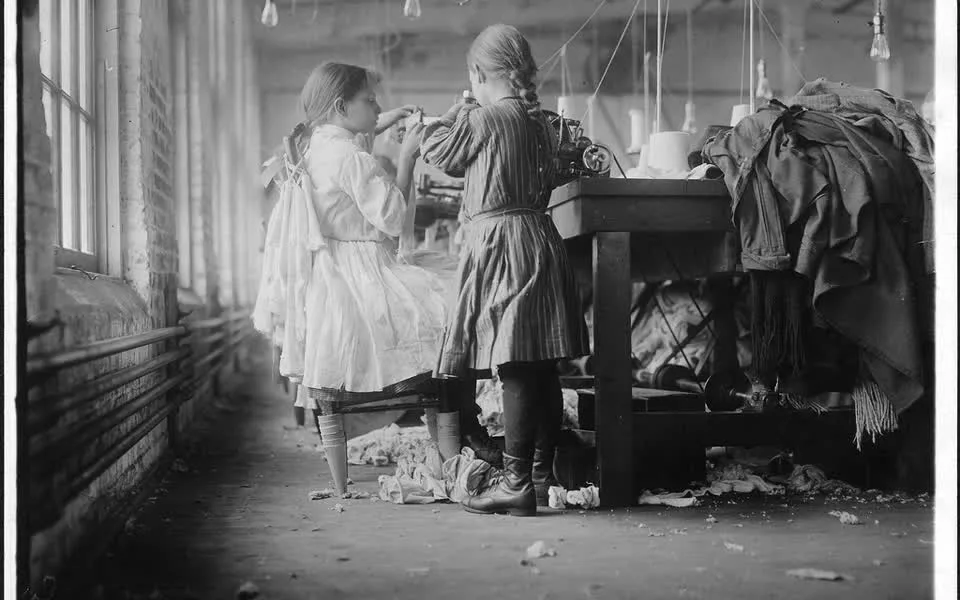
Canada's labour movement did not emerge fully formed. It was constructed over more than a century through strikes, legislation, defeats and hard-won victories by workers who demanded a fairer share of the wealth they helped create. Understanding that history helps explain why unions exist today and what they continue to fight for.
The Nine-Hour Movement and the Toronto Printers' Strike of 1872
The modern Canadian labour movement is often traced to the spring of 1872, when Toronto printers walked off the job demanding a nine-hour workday. At the time, workers in Canada had no legal protection for union activity. The printers' employer, George Brown of the Globe, had them arrested under British conspiracy laws that were still in force in the colony. Prime Minister John A. Macdonald, recognising an opportunity to embarrass a political rival, responded by passing the Trade Unions Act — making union membership legal for the first time in Canada.
The Nine-Hour Movement spread from Toronto to Hamilton, Montreal and other industrial centres. Workers demanded a reduction from the standard ten- to twelve-hour workday. Although most campaigns that year failed to win immediate concessions, the legal recognition of unions changed what was possible for the next generation of organizers.
The Trades and Labour Congress
In 1883, workers formed the Trades and Labour Congress of Canada (TLC), the first national labour federation in the country. The TLC brought together craft unions — printers, carpenters, cigar makers — and gave them a common political voice. Over the following decades the TLC lobbied Parliament for factory inspection laws, limits on child labour and an eight-hour day in federal employment.
Progress was slow. The Royal Commission on the Relations of Capital and Labour (1889) documented conditions that shocked many Canadians: children as young as nine working twelve-hour shifts, corporal punishment on the shop floor, fines docked from wages for minor infractions. The commission's findings fuelled public support for labour reform, though implementation took decades.
The Winnipeg General Strike, 1919
The most dramatic confrontation in Canadian labour history came in May 1919 in Winnipeg. Roughly 35,000 workers walked off the job in solidarity with metal and building trades unions that had been refused the right to collective bargaining. The strike lasted six weeks and paralysed the city. It ended in violence when federal authorities sent in the Royal North-West Mounted Police, killing two strikers on what became known as Bloody Saturday.
The Winnipeg General Strike did not win its immediate demands, but it fundamentally changed the politics of labour in Canada. Several strike leaders were elected to Parliament and provincial legislatures. The strike demonstrated the potential power of coordinated working-class action and accelerated debates about labour rights that would not be resolved for another generation.
Wartime Organisation and the Wagner Principles
The Second World War transformed the Canadian industrial workforce. Hundreds of thousands of women entered factories, shipyards and offices. Union membership surged as workers recognised their leverage in a wartime economy. A wave of strikes in 1943 convinced the federal government that legislation was needed to manage the relationship between employers and workers.
In 1944, the federal government issued Order-in-Council PC 1003, which established the right to organise, the duty to bargain in good faith, and certification through majority vote — principles borrowed largely from the American Wagner Act of 1935. These rules, later absorbed into the Canada Labour Code, remain the foundation of collective bargaining law in Canada today.
Formation of the Canadian Labour Congress
For much of the early twentieth century, Canadian workers were represented by competing federations. The TLC represented craft unions affiliated with the American Federation of Labor. The Canadian Congress of Labour represented industrial unions that had broken away after the AFL expelled industrial affiliates in the 1930s. In 1956, the two bodies merged to form the Canadian Labour Congress (CLC), creating a single national voice for organised labour.
The CLC brought together unions from across sectors — manufacturing, mining, public service, education — and gave them common representation before Parliament and provincial governments. It also helped found the New Democratic Party in 1961, establishing a direct link between the labour movement and social-democratic politics that persists today.
Public Sector Growth and Pay Equity
Union density in Canada peaked in the 1980s, driven largely by the growth of public sector unions. Workers in hospitals, schools, municipal government and the federal public service organised in large numbers through the 1960s and 1970s. The Public Service Staff Relations Act (1967) gave federal employees the right to strike for the first time, a milestone that was contested and costly but ultimately upheld.
Pay equity — equal pay for work of equal value — became a central demand from the 1970s onward, championed by women workers who were concentrated in lower-paid clerical, nursing and teaching jobs. Major pay equity settlements in the 1990s and 2000s corrected decades of systemic underpayment in the federal public service and several provinces.
Labour in the Twenty-First Century
Today the Canadian labour movement faces new challenges: the decline of manufacturing employment, the rise of precarious and gig work, and ongoing legislative attacks on collective bargaining rights in several provinces. Union density has fallen from a high of about 38 per cent in the 1980s to roughly 30 per cent today, with significant variation between the public and private sectors.
Despite these pressures, Canadian unions remain active organizers. Drives in warehousing, ride-share services, gaming and food delivery have brought new workers into the labour movement. The history of Canadian labour suggests that each period of challenge has eventually produced new forms of organisation suited to the conditions workers face.
For current campaigns and resources, visit the Canadian Labour Congress.